


Great steering, incredible engineering, astonishing - and brutal - pace
It costs £1.9m. And, um, you'll need a long, long road to V-max it
The Veyron’s reign as the world fastest production car is at an end, and the usurper comes from within. Yes, the £1.9m Chiron retains the Veyron’s fundamental proportions and powertrain, but it’s new in every other conceivable way, and built to bend physics to breaking point.
The Chiron is not a hybrid. Unlike its closest competitors – the McLaren P1, LaFerrari and Porsche 918 - it relies solely on fossil fuels. Its engine is a development of the Veyron’s 8.0-litre quad-turbo W16, its gearbox a strengthened version of the Veyron’s seven-speed twin-clutch, and like the Veyron it deploys its immense power through all four wheels.
“If we went with hybrid we would have added additional weight. We would have experienced package constraints, too, because this car doesn't have any areas where you can put additional stuff, so the styling would need to change,” Wolfgang Durheimer, Bugatti’s CEO explained. “We will dramatically raise the bar in terms of top speed, we will dramatically increase the power by 25 per cent, the aerodynamics are better, the road holding is better. We didn't need a hybrid.”
Whereas the Veyron Super Sport produced a piffling 1183bhp and 1106lb ft of torque, the Chiron develops 1479bhp and 1180lb ft. Oh, and at a constant top speed the Veyron could drain its 100-litre fuel tank in 12 minutes, the Chiron can do it in 9.
Clearly this is a game of very senior numbers, so here’s some more. It will accelerate from 0-62mph in less than 2.5 seconds, 0-124mph in less than 6.5 and 0-186mph in under 13.6. Take a moment to let that last one sink in. That’s 2.9 seconds faster than a P1 and a second quicker than the Veyron Super Sport, bearing in mind that at 186mph a second equals a lot of fresh air - 83m of it to be precise.
Then there’s the top speed, which Bugatti has limited to 261mph on the standard Chiron - a token 3mph more than the Veyron Super Sport - but raised to 273mph on the £2.6m Chiron Super Sport. That’s the elongated and pumped-up version that Andy Wallace drove at 304.773mph in 2019 – the first series production car to break the 300mph barrier. Well… a close approximation of it at least. You see, off the back of that speedy day out at Ehra-Lessien, Bugatti announced it would build 30 Chiron Super Sport 300+ special editions, visually and mechanically based on the record-breaking car (albeit limited to 273mph for tyre and life preservation purposes), with the same 8.0-litre quad turbo W16 engine boosted by 100 to 1,578bhp, all 30 in the same black-with-orange-stripes livery and costing £3m each. On top of that there’s the mechanically-identical ‘standard’ Super Sport model available in any colour you like… so long as you don’t copy the 300+ edition
Key to the engine’s swollen power reserves are four larger turbos that work in tandem to deliver maximum torque from 2000 to 6000rpm – that’s across 70 per cent of the engine’s full operating range. The two-stage system only calls on two turbos up to 3800rpm, to improve throttle response, and all four beyond that. A new titanium exhaust system helps out by reducing back pressure compared to the Veyron and houses two enormous catalytic converters – each six times the size of one you’ll find in a Mondeo. There are six exit pipes in total – four sticking out the back and two pointing downwards to create a blown diffuser – a downforce-boosting technology proven by, then subsequently banned in F1.
Everything about the Chiron’s powertrain is super-sized. An improved charge air cooling system means 60,000 litres of air per minute are pumped through the engine, while the coolant pump can circulate 800-litres in the same time. According to Willi Netuschil, head of engineering “temperature management is one of the biggest problems”. In total there are 10 radiators crammed under the Chiron’s skin.
With great power comes great need for big brakes, so the front and rear discs are now 20mm larger, 2mm thicker and made from carbon silicon carbide – a material that’s both lighter and more resistant to fade. Clamping them are eight-piston calipers in the front and six-piston at the rear – each piston a subtly different diameter to keep brake wear even.
The tyres, now 14 per cent wider at the front and 12 per cent wider at the rear, are wrapped around larger rims – 20-inch front and 21-inch rear – and built to withstand otherworldly forces. They need to be, as each gram of rubber is exposed to a centrifugal force of 3,800G. A bigger contact patch on the road means better braking, acceleration and wet-weather grip, while the updated four-wheel drive system uses electronic diffs on the front and rear axles, allowing fine control of the handling characteristics. More on that in a bit...
As a starting point for the world’s fastest car Bugatti uses a new carbon-fibre monocoque (each one takes four weeks to make), with a carbon-fibre rear-subframe attached to save 8kg versus the Veyron and boost rigidity, while the entire package is wrapped in a carbon-fibre skin. Bugatti claims torsional stiffness is now up there with an LMP1 prototype, while a new electric steering system and suspension bolted directly to the monocoque means it should react to inputs faster than a 1995kg car has any right to.
The Veyron’s significance transcends its obvious performance qualifications. Yes, it was the fastest, most complicated, most expensive thing available at the time, but it also prefaced a new technology language – one that virtually all modern fast cars have now adopted: turbocharging, all-wheel drive and perhaps most significant of all, the dual-clutch gearbox. The Veyron was essentially Volkswagen’s then-boss Ferdinand Piëch showing the world what his vast conglomerate could achieve. It was his Saturn V moment. And it was nearly as costly.
And yet the world never fell in love with the Veyron. It was never a poster car in the mould of a Countach or an F40 – somehow Piëch created a kind of million-dollar Audi Quattro that we respected but didn’t crave and desire.
But the the Chiron is so enigmatic – it goes about its everyday business with a competence that belies just how much engineering has been thrown at it to be able to travel at such remarkable speeds. We expected a facelifted Veyron – we expected to come away questioning the Chiron’s reason for being. Instead we drove a car that does things no other car can; one with a distinct personality.
Which model would we go for? Bugatti will only ever build 500 Chirons, but within that will be a mix of Chiron, Chiron Sport, Chiron Pur Sport and Super Sport. The coachbuilt specials – Divo, Centodieci, Voiture Noire – are on top of the 500. In fact, the standard Chiron and Chiron Sport have come to the end of their homologation run, so if you have a spare few million sloshing around, your choice is only between Pur Sport and Super Sport.
The best way to think of the Super Sport is as the Chiron Streamliner - the Chiron Pur Sport and Bugatti Divo lean more towards cornering, lap times and handing ability whereas the Super Sport at its core is about minimising drag and maximising straight line speed. But it can still handle itself around a track, maybe not to the same extent, but its bandwidth is definitely wider than the more hardcore models. Given the Chiron was always designed as a monster GT more than a track rat, it would be a Super Sport all day for us.
.png)
Yesterday I decided to break free from the studio and take the phone out with me for the day. There have been plenty of other days over the past six months that I’ve had the phone with me on days out – but yesterday was a little different.
This was all about the iPhone.
I wouldn’t be plugging it into the car to charge it all – I wanted to stress test the 4,422mAh battery on the 15 Pro Max to see what it was made of.
I was going to be shooting quite a lot of videos and taking many, many pictures as well. I wanted to take a close look at the three focal lengths on the 48MP main camera and use the 5x 120mm zoom as well. And aside from that I’d be streaming music in the car to Apple CarPlay – although as it turned out I didn’t need to use sat nav at all. Bluetooth would be on all day as well. In other words, this was using my phone as I’d normally have it set up.
My normal day finds me at the desk with the phone sitting on my MagSafe charger meaning it’s hard for me to judge what the battery is like – but yesterday it was put through its paces. I left home just before 9.45 AM with 92% charge.
As I mentioned earlier, one of the main new feature sets that came to the 15 Pro Max was the three different focal lengths on its main camera.
You can now shoot at 1x with the 24mm lens but then you can also choose to shoot at both 1.2x with a 28mm focal length or 1.5x with a 35mm setting. The speed and simplicity that you can switch between the settings means it’s useable too.
Pixel peeping in Lightroom these images hold up well. There is some serious quality to the images even when I compare them to the RAW files from my Canon. The quality comes from the fact the files are big! That 24mm 48MP lens is capturing a ton of information. The first picture below is the 1x 24mm and that file is 8064 x 6048 and 86 MB…I come from a print & design background and I can tell you that file size would be useable for print…that is a lot of data!
three images were taken using the 28mm/35mm/120mm lenses and although you may not be able to tell here, even at 120mm 5x on a very dull day the image is crisp, sharp and with virtually no ghosting. It’s the first time that I have looked this critically at the images taken with the iPhone 15 Pro Max – and with a semi-professional eye, I’m impressed. These were taken hand-held and don’t forget the light and conditions were not great.
It’s interesting to see what the iPhone did with the ISO on the various focal lengths dropping from 100 ISO on the 24mm to 50 ISO at 120mm. We forget just how clever these phones are – making all these adjustments on the fly in the background. If these were shot on my Canon I’d be having to make all manner of adjustments manually. For those of you who love data – the lens aperture on the 48MP main camera at 24mm/28mm/35mm was ƒ/ 1.78 and on the 12MP 5x telephoto the lens aperture ƒ/2.8. And even on the 120mm zoom lens, there is still useful amounts of data – the file is 30MB and 4000 x 3000.
Oh, by the way, when folks bang on that there is no AI with Apple – just look at the info that the Photo app gave me on these images…pretty impressive huh!
The title wasn’t clickbait – promise.
Whilst I had been mighty impressed by the results the camera was giving me, the same can’t be said for the battery – just 2 hours into the day and it was not holding up well as you can see below – oh, and it’s one of the few times that the Dynamic Island comes into use – keeping track on my car park session…Battersea is home to both Apple’s head office and also their latest flagship store. Again here you can see the might of the 5x lens – I am becoming quite a fan of it. To give you context the first image is shot with the 24mm 1x lens and the second with the telephoto lens – you can even clearly read the words on that monitor on the desk which is barely visible on the 1x shot – bloody amazing!
In the store, I went to take a quick look around the iPad Pro. As you know I’m thinking of buying one if we get the OLED displays that have been promised – I saw how Stage Manager works on an iPad for the first time – now it makes sense. Perhaps…perhaps I can see myself using one after all…
The rest of the afternoon in London was spent shooting a short on the iPhone and some other shots of the Thames which runs behind the Battersea store. The weather was still dull and dank but the camera did its best to make the best of awkward conditions.
After I finish writing this I’m going to start editing the video. I think I got all the shots & content I needed and possibly having written this I have just thought of a follow-up video as well…
Having pulled apart the camera for the first time – looking closely at the images in Apple’s Photo app, Lightroom & Photoshop I am properly impressed. For everyone but the highest-end professional users the stills camera set-up on this iPhone is going to get the job done.
The same is true of the video camera. Using the native video camera gave great results but all the good came at a cost. You can see from the attached metadata & screenshot I got home almost 8 hours to the minute after leaving home in the morning.
In those 8 hours, the phone was in constant use – 1 long-ish call, no sat-nav but streaming music. I shot around 50 pictures and about 10 videos – none of them long and there was no hot-spotting.
But to get back with only 10% battery was a shock. Surely it would be fair to expect more than 8 hours of use, wouldn’t it? This is Apple’s flagship iPhone – the Pro Max.
Those two words in this context are telling Pro and Max. This iPhone is designed for Pro’s and being the Max it has the biggest battery. If that battery can’t last a full day what does that mean for the other phones in the lineup?
There were many good points to come out of yesterday’s test – but the results of the battery dulled off those highs.
What a sham

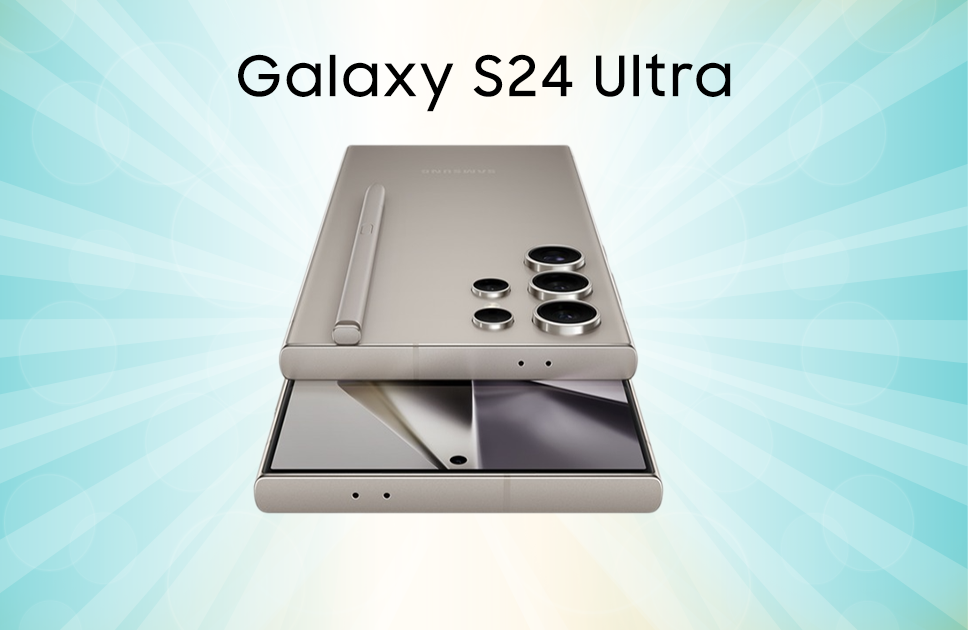
Samsung surprised the world on January 17th 2024, with their new flagships, to be precise the S-series lineup.
Among the three beasts, the one get’s most hype as usual, which is the Galaxy S24 Ultra, yes you heard that right, “Ultra” meaning you get ultra amazing features, greater build quality and updated specifications.
From the first view, you won’t feel a newer device has arrived, as the Galaxy S24 ultra really looks a lot like your previous Galaxy S23 ultra. There’s a slight differentiating factor that comes down, which is the sharper corners and flat display that really are not going to please you if you were a curved display lover.
You might love the upgraded Qualcomm chipset, new Galaxy AI features and upgraded periscope telephoto camera of course. And to understand all that, let’s dive into today’s review about the Galaxy S24 Ultra. Without further ado, let’s jump right in.
While before diving into the detailed Samsung Galaxy S24 Ultra review. Here are the short key features of the device:
|
|
|
|
|
|
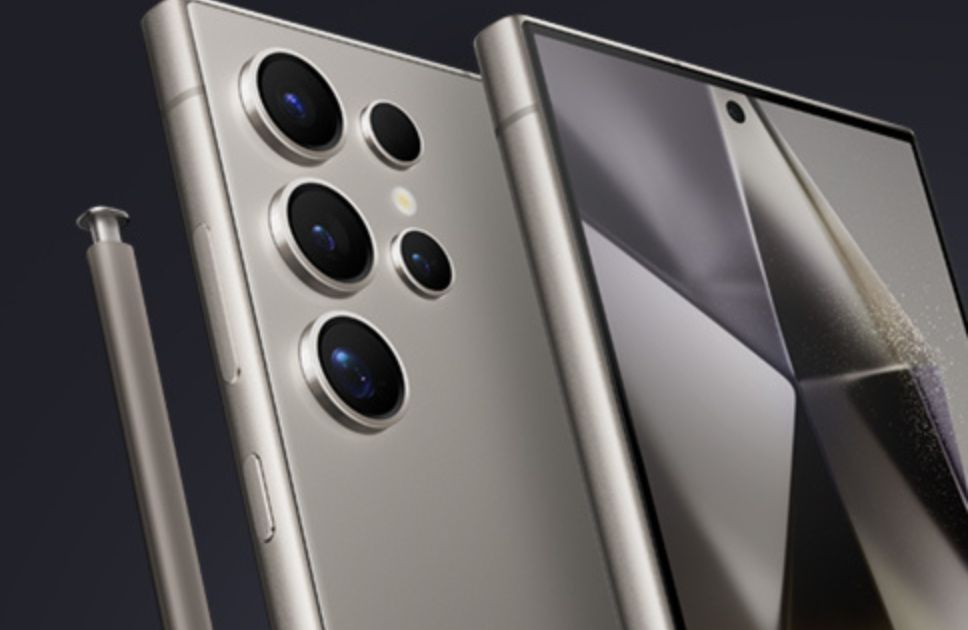
Before jumping into the overall Samsung Galaxy S24 Ultra review, here’s a quick heads up about the Samsung Galaxy S24 Ultra’s good and bad sites:
| Pros: | Cons: |
 Qualcomm Snapdragon 8 Gen 3 delivers incredible power; Qualcomm Snapdragon 8 Gen 3 delivers incredible power;
|
 No 3.5 headphone jack; No 3.5 headphone jack;
|
Latest Price of Samsung Galaxy S24 Ultra
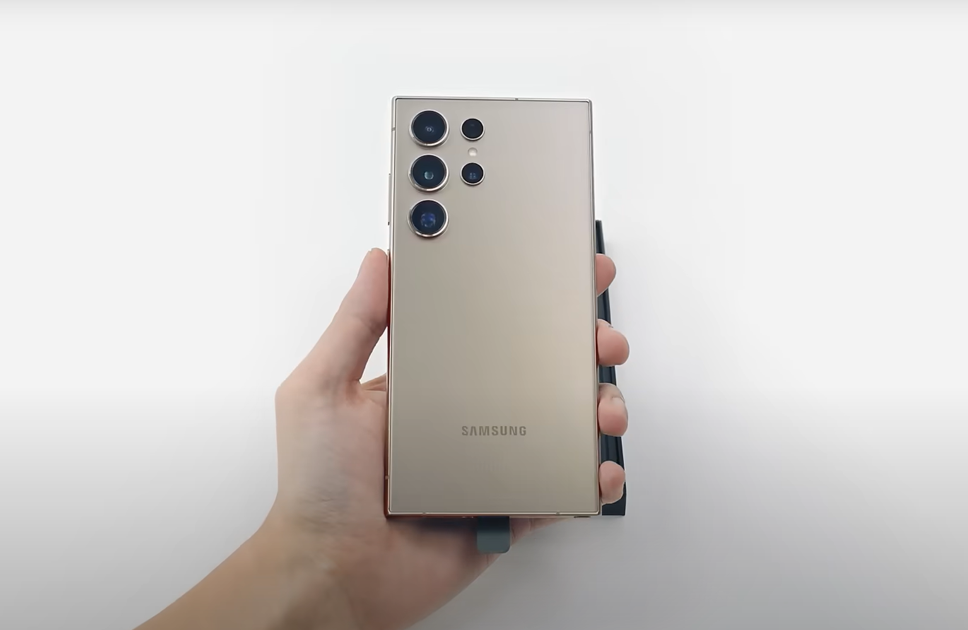
Starting off with the design features, you get completely flat edges all-around the display, making the S24 Ultra less curved than it usually were in the previous S23 Ultra. The camera modules are the same as last year’s, while there is still no 3.5mm headphone jack as usual. There’s a Stylus in the bottom, that comes out just like a button press and snugs back in with just a push. Besides that, all the design features are pretty usual as last year’s flagship.
As for colors, you get newer options now, due to changes in material, Samsung decided to name all the vibrant colors possible. You get “Titanium Black, Titanium Gray, Titanium Violet, yellow, blue, green and orange. Especially the color “Titanium Violet” & “Titanium Yellow” really making a hype, due to its vibrant eye-catchy coloring.
Coming to the build quality, you get newer material all around, as there is the new “Titanium”, hype in the market which promises greater durability and premium finishes. While the titanium build did not make the device lighter, you just 232 grams which is like 1 gram lighter than the previous Galaxy S23 Ultra.
Besides that, you also get similar water resistance like last year’s model, which is the IP68 of up to 1.5 meters for 30 minutes straight. There’s also premium materials on the front as well, like the upgraded Gorilla Glass Armor ensuring safety for your display.
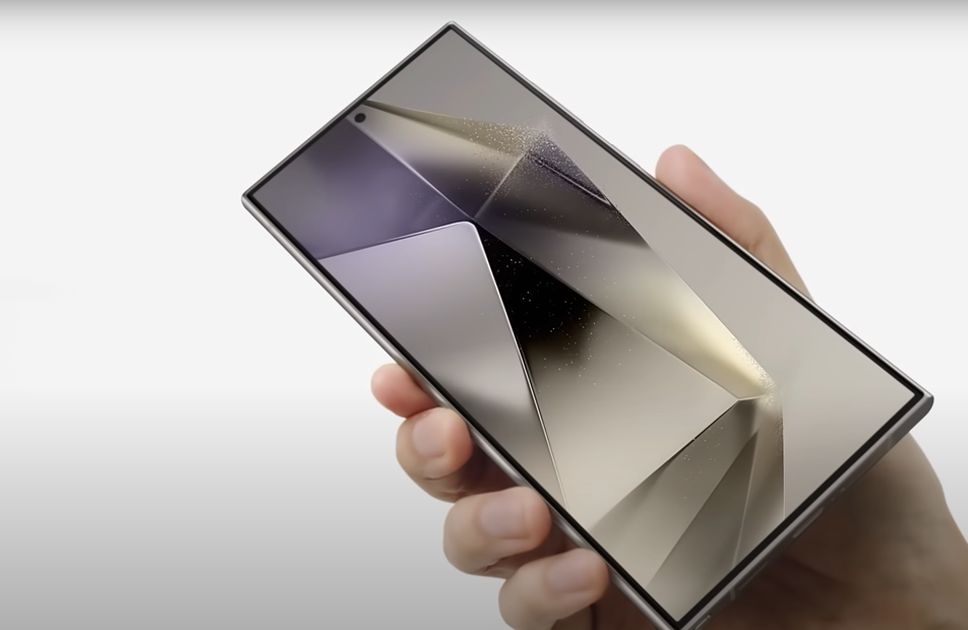
Moving on, let’s talk about the display, which comes with a similar resolution like the 1440 by 3120 resolution in that large 6.8-inch display. Now this large display is similar to the previous S23 Ultra as well, no new feature, what’s new actually would probably be the flatter display now. Giving you more control over the narrow-edge display section on certain apps like music or web browser scrolling, instead of the curved display from last year.
Samsung made the display brighter from the previous model, making around 2600 nits now, from 1750 nits of peak brightness. Around 48% brighter than the previous S23 Ultra. While other factors, like the 120Hz refresh rate, vivid content viewing from the HDR10+ and AOD feature are still there, just like before. Only the flat panel and higher peak brightness are the new features to notice this year.
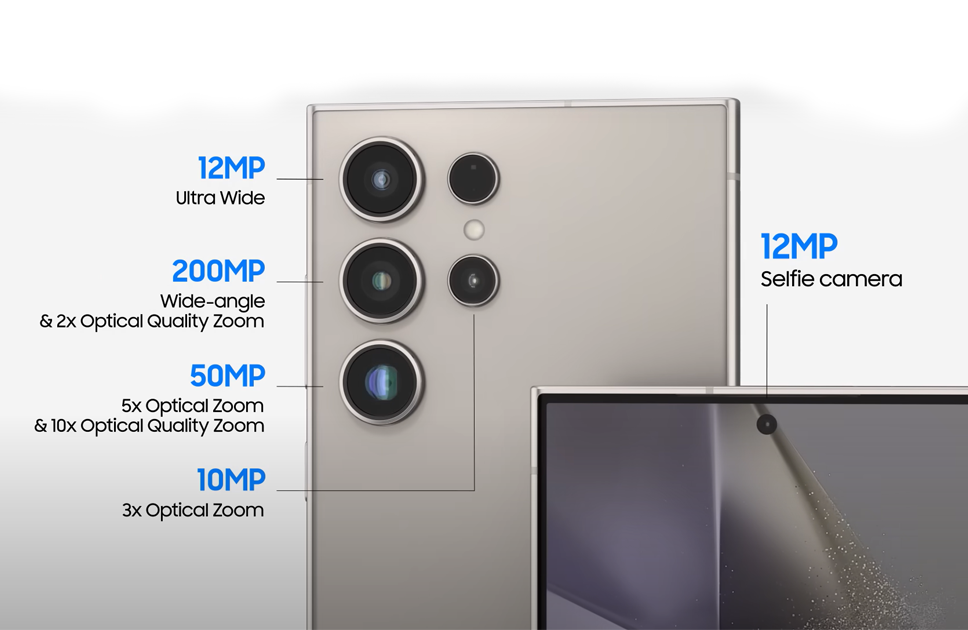
As for the camera features, you get just a few upgrades to be honest. While the rest of the camera capabilities remained the same as usual.
As for the main 200MP camera, you get a similar f/1.7 aperture with Quad pixel PDAF, that gives you better autofocus with even more reliable and accurate photography results for day and night time. The color contrast of the photos seems vibrant and no noise seen in the daylight shooting.
There’s a new upgrade for the periscope telephoto lens, which is in the camera megapixel, as now you get a 50MP camera with 5 times zooming capabilities, where it was just 10MP with 10x optical zooming on last year’s S23 Ultra. Now due to this new setup Samsung gives you a better zoom shot with this upgraded camera and smaller f/3.4 aperture.
While the telephoto lens remained pretty the same, like a 10MP camera with f/2.4 aperture, giving you around 3 times optical zoom. The photos look colorful for the 3 times zoom shots, while the sharpness get lower when you zoom up to 10 times.
As for the ultrawide lens, it comes with a 12MP as well like last year’s with f/2.2 aperture. For daylight capturing you get pretty good shots for artifacts shooting. Even while shooting in darker area’s nighttime photos shows good color accuracy while maintaining shadows and overall lighting of the area.
For recording though, you get up to 8K resolution with 24 or 30fps shooting capabilities, which is similar as last year, now that recording gives you crisp shots for minimum range of course. While shooting a daytime in 8K shows good sharpness for up to 5 times zoom, surprisingly you get good stable shooting for zoomed videos, even the colors remain accurate as well.
Talking about the front camera with 12MP and f/2.2 aperture, you get similar features like last year’s model. There’s of course no changes, but due to better processing power, your photos will appear faster and with more accurate shots, thanks to the 26mm wide lens. Ther’s Auto-HDR and as well as dual video calling, which literally means you can shoot front and back panel at the same time.

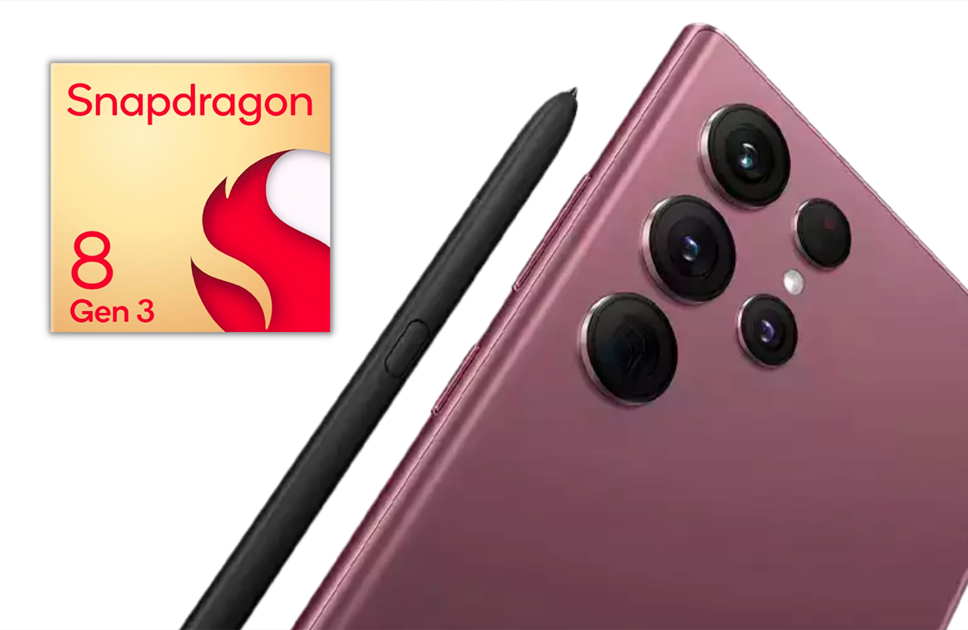
Coming to the performance section, you get the updated chipset from Qualcomm, which is the Snapdragon 8 Gen 3, that’s a similar 4 nanometer chipset structure with a greater cpu frequency for around .88%, which is not much but obviously will give you some improvement.
As for gaming performance, things get aggressive right here with heavy testing for top tier games. With Pubg Mobile you get up to 90fps, for Call of Duty Mobile there is around 60 fps, and for Genshin Impact you will get around 59 to 60 fps, which is pretty good.
Talking about the multimedia section, you get all the top-notch features as expected. There is HDR10+ with a greater AKG audio system gives you immersive sound quality and extraordinary movie experience for high-resolution content viewing.
For greater connectivity, you get updated Wi-Fi features, and location tracking. LIke the Wi-Fi 7 which was previously Wi-Fi 6e, making the download and upload speed improved for your faster content streaming on Netflix or other streaming platforms.
After the death of the Note series, Samsung introduced their signature pen with the most flagship “Ultra” lineup. That brings all the features of the older note features, like quick note taking, make creative artwork and even control your business presentation slides with a click of the S-pen’s dedicated button. And with the newer flat display of the S24 Ultra, you get better precision with the built-in S pen on your creative art creation.
Despite all the new Android features from the Android 14, there are new features like custom app actions and more informative preview results for users and more. What’s exciting is the new software features from Samsung themselves. As Samsung announced groundbreaking “Galaxy AI,” bringing in a new era of mobile AI actions and features.
This year Samsung brings newer “Galaxy AI” features with all their devices that revolutionizes the smartphone experience, empowering users to unleash unprecedented levels of creativity, productivity, and possibility. This advanced feature integrates seamlessly into everyday tasks, making your smartphone the ultimate tool for innovation and expression.
Experience the convenience of “Circle to Search,” a magical feature that simplifies information retrieval. Simply circle the object or feature, and relevant information instantly appears, streamlining your interaction with the device.
Travel effortlessly with “Live Translate,” providing real-time translation support for seamless communication abroad. Whether you’re exploring new destinations or conducting business globally, the Galaxy S24 Ultra ensures language barriers never hinder your interactions.
Maximize productivity with “Note Assist,” a smart note-taking feature that enhances multitasking efficiency. From jotting down quick reminders to organizing detailed plans, staying organized has never been easier.
You can also edit better photos and enhance your captured photo with the “Photo Assist” feature, empowering you to edit and manipulate photos effortlessly. From adjusting objects to perfecting snapshots, elevate your photography skills to new heights.
Stay ahead with extended OS and security updates, offering three years of additional support for a total of seven years. This extended support ensures longevity and reliability, making the Galaxy S24 Ultra a wise investment for the future.
Samsung Knox ensures your privacy and security remain solid. And Samsung has been providing this security feature for their flagship users along with midrange as well. This continuation of including these useful security features that safeguard user data from external attacks is really appreciable.
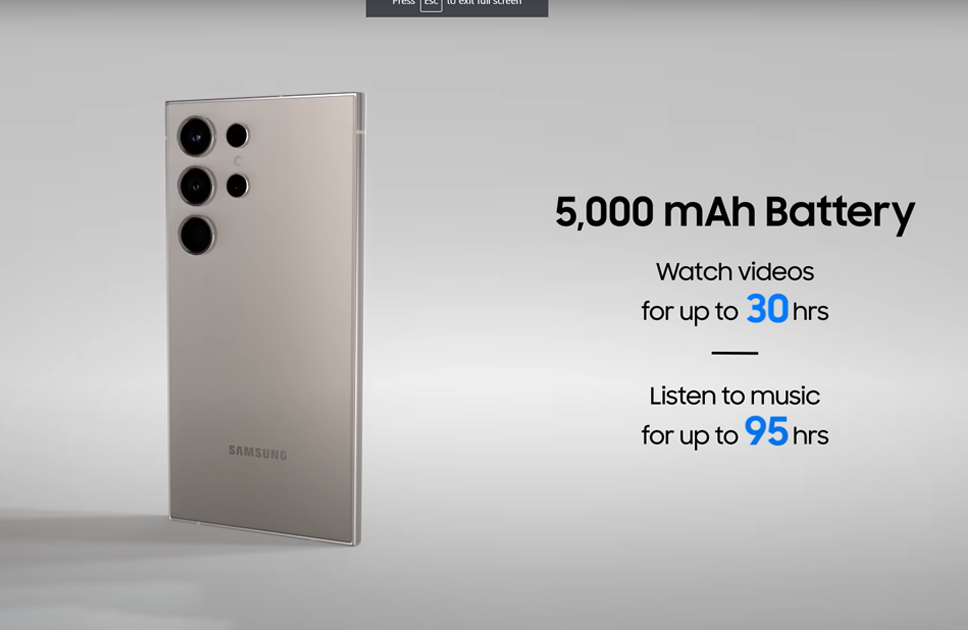
Lastly, let’s discuss the battery features of this beasty device, which is surprisingly the same 5000mAh Li-Ion battery, consistent with previous models. To be honest after all this year’s of including the similar five thousand ampere battery, Samsung could’ve made some space to add a few extra milliamp battery inside. As they literally deleted the 3.5mm headphone jack, so an inclusion of a higher battery was expected.
While Samsung promises impressive battery life on their website, real-world usage may vary. In continuous battery tests, the device can get warm, yet retains a substantial 68% charge after a full-length feature film like Christopher Nolan’s “Oppenheimer.”
Charging options include a 45W wired capability with a Type-C Cable, though notably, this cable is not included in the box as in previous iterations. Samsung claims a 65% charge in 30 minutes with PD3.0, but users often experience around 70% in under 45 minutes.
Wireless charging is also available at 15W, requiring Qi-certified chargers. Additionally, the Galaxy S24 Ultra features a 4.5W reverse wireless charging option, offering assistance to friends in need or during emergencies. Despite minor discrepancies between advertised and real-world performance, the Galaxy S24 Ultra’s battery features provide versatility and reliability for everyday use.
While still understanding all the major details inside the Samsung Galaxy S24 Ultra review, here are the more technical specifications of the Samsung Galaxy S24 Ultra down below:
| Specs | Samsung Galaxy S24 Ultra |
| Display | 6.8‑inch, 1440 x 3120 pixels, 505 PPI, Dynamic LTPO SUPER AMOLED 2x, 120Hz, HDR10+, 2600 nits, Always-On Display |
| Protection & Weight | Corning Gorilla Glass Armor | Titanium Frame | IP68 Dust Or Water Resistant (Up To 1.5 Meters For 30 Minutes) |
| Camera | Main: 200MP, f/1.7 (Wide) | Laser Autofocus, OIS 50MP, f/3.4 (Periscope Telephoto) | 5x Optical Zoom 10 MP, f/2.0 (Telephoto) | 3.0x Optical Zoom 12MP, f/2.2 ( Ultrawide) | Super Steady Video Features: Night mode, Auto-HDR, Panorama, Photo Assist by Galaxy AIVideo: 8K@24/30fps, 4K@30/60/120fps Features: Dual Video Calling, Auto-HDR, HDR10+Front Camera: 12 MP, f/2.2, 26mm (wide)Video: 4K @30fps/60fps, 1080p@30fps |
| Platform | OS: Android 14, One UI 6.1
CPU: Qualcomm Snapdragon 8 Gen 3 (Up to 3.39GHz) GPU: Adreno 750 |
| RAM & ROM | 256GB+12GB RAM, 512GB+12GB RAM, 1TB+12GB RAM UFS 4.0 |
| Audio & Video | Stereo Speaker | Tuned by AKG | HDR10+ Video Supports |
| Battery | 5000mAh, 45W Wired, 15W Wireless (Qi Certified) , 4.5W Reverse Wireless |
| Sensors | Fingerprint (under display, ultrasonic), accelerometer, gyro, proximity, compass, barometer |
| Connectivity | Wi-Fi 802.11 a/b/g/n/ac/6e/7, Tri-Band, 5G, LTE, Bluetooth 5.3 |
| Features | Samsung DeX, Samsung Wireless DeX (desktop experience support)
Ultra Wideband (UWB) support, Nano-SIM and eSIM/ Dual eSIM or Dual SIM |
| Colors | Titanium Black, Titanium Gray, Titanium Violet, Titanium Yellow, Titanium Blue, Titanium Green, Titanium Orange |
Last of all, the Samsung Galaxy S24 Ultra has really newer features and updated chipset in the market to attract their users. Although it seems like mostly Samsung loyal fans will truly feel the purchase option. As you only have a few major upgrades from last year’s model, and a bit of magic AI seems like a sprinkle on top of a cake.
You can really choose the newer Ultra from Samsung on the basis of few certain factors, as you literally get a upgraded chipset on board, higher periscope camera megapixel for taking zoomed shots, 7 years of OS and security updates and Galaxy AI is will make you feel like a magician on certain actions like photo editing, translating languages easily and so on. There’s also better build quality from the Titanium frame and flatter display that gives you specific touches on those certain apps.
Do remember, there are few drawbacks that give you a hint to rethink your investment on Galaxy S24 Ultra. Like there’s still no upgrades in the battery portion, the headphone jack and memory slot is missing, still no adapter in the box that might cost you a little bit extra to buy if you don’t have one already and lastly the updated price tag from last year’s model.
And if you don’t have any issues with all the drawbacks, and really need those internal greater upgrades, titanium and super useful Galaxy AI features, then the Samsung Galaxy S24 Ultra can be your next cool flagship phone to go for.


